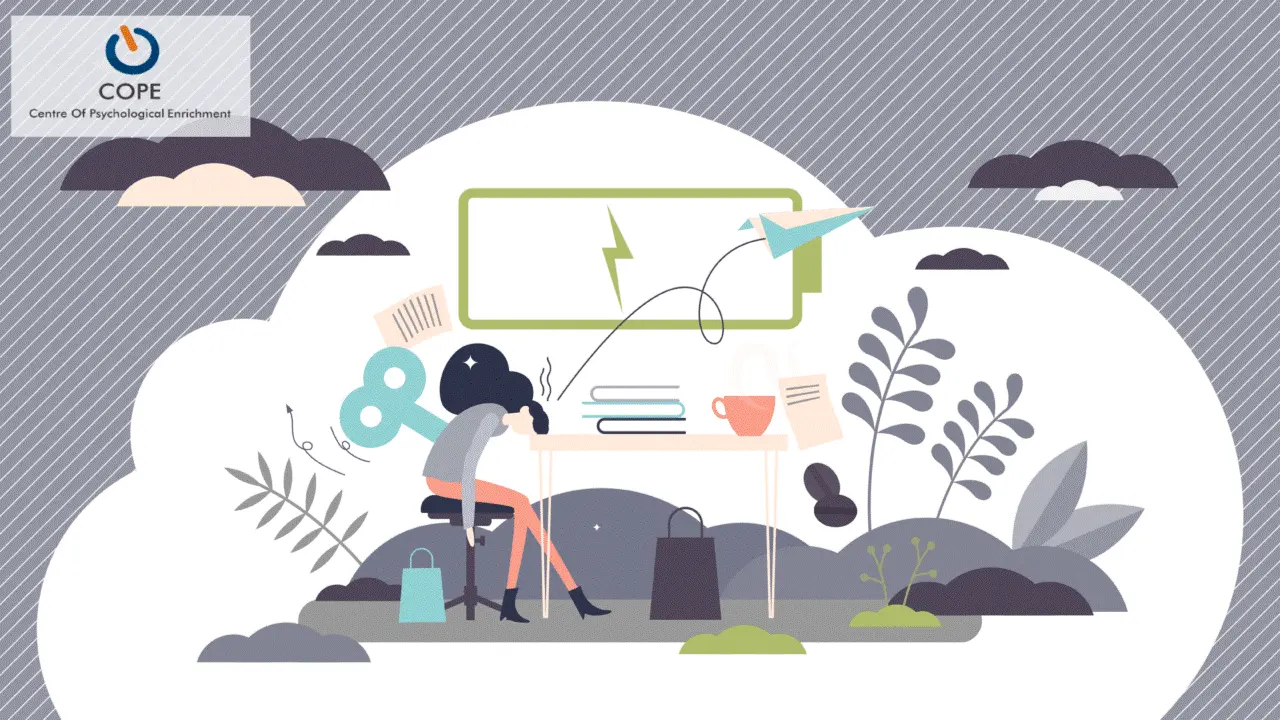
The Silent Epidemic of Mental Fatigue: How to Reclaim Your Energy
We live in an age of unprecedented comfort, convenience, and connectivity—yet more people than ever feel mentally drained. This exhaustion often has no dramatic cause, no visible illness, and no single triggering event. It creeps in quietly, day after day, until life begins to feel heavy, dull, and effortful. This is mental fatigue—the silent epidemic of modern life.
Unlike physical tiredness, mental fatigue does not disappear with a good night’s sleep or a short holiday. You may rest, yet still wake up feeling depleted. You may slow down, yet feel no real recovery. Something deeper is happening at the level of the brain, nervous system, and hormones. Understanding mental fatigue is the first step toward reclaiming your lost mental energy.
What Is Mental Fatigue, Really?
Mental fatigue is not laziness. It is not a lack of discipline or motivation. It is a state of cognitive and emotional overload, where the brain’s processing capacity is stretched beyond what it can sustainably handle.
Common signs of mental fatigue include:
- Persistent brain fog
- Difficulty concentrating
- Reduced creativity
- Irritability and emotional flatness
- Decision avoidance
- Feeling mentally “full” but unfulfilled
Many people confuse mental fatigue with depression or burnout. While they can overlap, mental fatigue is often the earliest warning signal—the stage where recovery is still relatively simple if addressed correctly.
Why Mental Fatigue Has Become So Common
The human brain evolved to work in cycles of focus followed by rest. Modern life has almost completely removed the rest.
Key contributors to mental fatigue include:
- Continuous screen exposure
- Endless notifications
- Multitasking
- Constant decision-making
- Information overload
- Emotional demands without processing time
Even activities we consider “relaxing”—scrolling social media, binge-watching, checking messages—continue to stimulate the brain rather than restore it. The result is digital burnout, where the mind is never truly quiet.

The Brain Under Constant Demand
The prefrontal cortex, responsible for focus, planning, self-control, and decision-making, is particularly vulnerable to exhaustion. When it is overused without recovery:
- Glucose consumption increases
- Neurotransmitter balance is disturbed
- Error rates rise
- Emotional regulation weakens
Mental fatigue is not just a feeling—it is biochemical depletion at the neural level. This is why pushing harder often makes things worse, not better.
The Hormonal Cost of Brain Exhaustion
Mental fatigue is closely tied to hormonal imbalance.
Elevated Cortisol
Chronic cognitive stress keeps cortisol levels high, leading to:
- Anxiety
- Irritability
- Sleep disturbances
- Emotional volatility
Dopamine Dysregulation
Overstimulation causes dopamine spikes followed by crashes, resulting in:
- Loss of motivation
- Mental restlessness
- Reduced pleasure
Reduced Serotonin
Low serotonin contributes to:
- Overthinking
- Low mood
- Emotional instability
Mental fatigue is therefore a neuro-endocrine state, not merely a psychological issue.
Why Sleep Alone Is Not Enough
Sleep is essential, but it cannot fully repair mental fatigue caused by continuous cognitive overload during waking hours. If the mind is:
- Constantly stimulated
- Emotionally strained
- Rarely quiet
sleep becomes shallow or non-restorative—even if you sleep long enough. Mental energy recovery requires daytime mental hygiene, not just nighttime rest.
Mental Fatigue and Emotional Drain
Unprocessed emotions are a major hidden cause of mental fatigue. Suppressed worry, guilt, frustration, and emotional responsibility keep the brain in a background state of vigilance. This constant internal monitoring consumes enormous energy.
Mental fatigue often improves dramatically when emotions are:
- Acknowledged
- Named
- Allowed to pass without suppression
This is not emotional weakness—it is nervous system exhaustion asking for relief.
The Illusion of Productivity
When mentally tired, many people push harder, believing discipline will solve the problem. In reality, productivity without recovery leads to:
- Diminishing returns
- More mistakes
- Emotional detachment
- Burnout
A rested mind achieves more in two focused hours than an exhausted mind does in an entire day. Clarity—not pressure—creates true productivity.
The Effortless Health View of Mental Energy
Effortless Health recognises that mental energy is renewable—but only when renewal is built into daily life. Energy returns when:
- The nervous system shifts into parasympathetic mode
- Cognitive load is reduced
- Attention is simplified
- Emotional processing is allowed
Reclaiming mental energy is not about doing more. It is about removing what drains you unnecessarily.
Practical Ways to Reclaim Mental Energy Naturally
Start gently. The brain recovers through permission, not force.
1. Create Thought-Free Spaces
Short periods without input—no phone, no music, no conversation—allow neural circuits to reset.
2. Single-Task Consciously
Multitasking fragments attention. Single-tasking restores depth and efficiency.
3. Reduce Digital Noise
Turn off non-essential notifications. The brain needs predictability to feel safe.
4. Insert Micro-Pauses
Even 60 seconds of silence between tasks prevents cumulative cognitive overload.
5. Acknowledge Emotions
Naming emotions reduces their mental weight and frees cognitive resources.
These are simple stress reduction habits that support natural brain recovery from overload.
Mental Fatigue Is Reversible
This is the most important truth: mental fatigue is reversible. It is not permanent damage—it is reversible overload. When you:
- Simplify your mental environment
- Respect cognitive limits
- Restore emotional flow
- Reduce unnecessary stimulation
the brain heals faster than most people expect. Many notice clearer thinking within days and renewed motivation within weeks—without forcing.
Why Calm Minds Look Powerful
A calm mind is not empty—it is efficient. Calm people:
- Think clearly
- Decide wisely
- Respond instead of react
- Conserve energy
- Recover quickly
Mental energy is not about intensity. It is about coherence.
Final Reflection
Mental fatigue is not a failure—it is the body’s quiet warning. It says: slow down, simplify, and restore. When you listen early, recovery is gentle. When you ignore it, the cost grows heavier.
Effortless Health teaches that mental energy is preserved not by pushing harder, but by living wiser. Your clarity, focus, and vitality are not lost—they are waiting for the conditions where they can return.