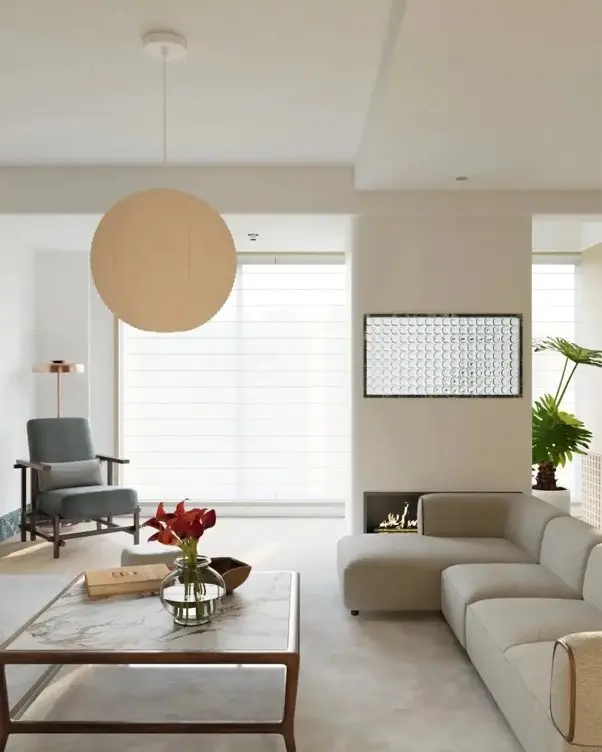
The Science of Effortless Living: Why Simplicity Heals
In a world overflowing with information, noise, urgency, and demands, simplicity is no longer a luxury — it is a biological necessity. Many people believe that living simply is a philosophical preference or a lifestyle trend. But beneath the surface, simplicity has a deep scientific foundation rooted in neurology, endocrinology, psychology, and behaviour science.
Effortless living does not mean avoiding responsibility, escaping challenges, or living slowly. It means living with such clarity, alignment, and inner steadiness that your mind, body, and emotions no longer work against you — they work for you.
When you simplify your life, your physiology becomes more coherent, your mind becomes sharper, your decisions become cleaner, and your inner chemistry shifts toward healing. This is the science of Effortless Health, and it begins with understanding how simplicity changes the brain and body at every level.
1. Why Modern Life Feels Hard: The Overloaded Brain
Human beings have extraordinarily sophisticated brains, but they were never designed for:
- Constant notifications
- Endless multitasking
- 24×7 comparison on social media
- Emotional overstimulation
- Continuous decision-making
- Chronic uncertainty
- Information overload
The prefrontal cortex — the CEO of your brain — can handle only one complex task at a time. When bombarded with too much input, the brain becomes like an overloaded computer: slow, fragmented, irritable, and prone to errors. This leads to:
- Decision fatigue
- Emotional exhaustion
- Reduced creativity
- Impaired memory
- Lower problem-solving ability
- Higher anxiety and cortisol levels
Simplicity is not a preference; it is the antidote to cognitive overload. When you simplify your inputs, your brain regains its natural rhythm and efficiency.
2. The Hormonal Impact of Simplicity
Your lifestyle choices — the way you organize your day, your habits, your environment, your thoughts — constantly shape your hormone chemistry. Simplicity directly influences some of the most important hormones in your body.
Cortisol decreases with simplicity
Mental clutter, social comparison, hurry, and overwhelm raise cortisol.
Simplicity reduces cortisol by restoring predictability, creating mental space, and lowering emotional noise.
Serotonin rises when life feels orderly
When your surroundings are decluttered and your routines are streamlined, serotonin increases, leading to:
- Emotional stability
- Inner confidence
- Calmness
- Improved mood
Dopamine becomes balanced, not chaotic
A simple life reduces dopamine spikes from overstimulation (screens, notifications). Balanced dopamine means:
- Better focus
- Better motivation
- Increased discipline
- Reduced impulsiveness

Oxytocin grows through meaningful connections
When you simplify your schedule, you make time for intimacy, family, friendships, and self-connection — all of which elevate oxytocin, the bonding hormone.
In short, simplicity modulates your entire endocrine orchestra, bringing harmony instead of chaos.
3. Effortless Living: When Biology and Mind Align
An effortless living is not a life without effort; it is a life where effort feels natural, smooth, and frictionless.
When does effort become effortless?
When your biology aligns with your intentions.
For example:
- A calm nervous system supports better decisions.
- Balanced dopamine supports consistent habits.
- Low cortisol supports emotional clarity.
- Stable blood sugar supports stable moods.
Imagine rowing a boat with the river instead of against it. Effortless living is about creating internal conditions where life flows in your favour.
This is not magic. It is science.
4. The Power of Simplicity in Habit Formation
Most people fail to create new habits because the steps are too big, too complicated, or too demanding. Simplicity solves this. Behavioural science shows that the brain loves:
- Simple steps
- Clear cues
- Short routines
- Predictable rewards
This is why micro-habits work. When you simplify a habit to something effortless, your brain accepts it. Once accepted, it multiplies.
For example:
- Instead of “exercise 1 hour daily,” begin with 7 minutes.
- Instead of “meditate every morning,” begin with 2 minutes of silence.
- Instead of “eat healthy,” begin with one healthy meal a day.
Simplicity initiates momentum, and momentum creates transformation.
5. Effortless Living: How Simplicity Improves Emotional Health
Complexity creates emotional turbulence. Simplicity brings balance. When your life is cluttered with too many commitments, too many expectations, too many comparisons, and too many roles, the emotional mind becomes overstretched. By simplifying your inner and outer life, you allow your emotional system to reset. Simple Living = Accessible Calm
Simplicity reduces:
- Overthinking
- Rumination
- Regret
- Fear
- Anxiety
- Self-judgment
It increases:
- Clarity
- Self-acceptance
- Confidence
- Joy
- Emotional intelligence
In simple living, your mind becomes a friend, not an enemy.
6. The Neuroscience of Clarity
Clarity is the natural by-product of simplicity. A cluttered mind cannot think clearly because too many competing circuits are firing simultaneously. This drains glucose and oxygen — the brain’s fuel. A simplified lifestyle reduces neural noise and strengthens the neural pathways that matter most. Neuroscience shows that clarity improves when we:
- Reduce sensory overload
- Maintain minimal digital stimulation
- Organize our environment
- Create predictable routines
- Sleep adequately
- Pause between activities
These behaviours enhance the brain’s executive function, which governs focus, planning, creativity, and insight. When clarity increases, life becomes easier.
7. Simplicity and Physiological Healing
Your organs also respond to simplicity.
Sleep improves
Fewer late-night distractions → earlier bedtime → deeper restorative sleep.
Digestion improves
A calm mind reduces sympathetic overdrive, improving gut motility and reducing acidity and inflammation.
Immunity strengthens
Chronic complexity weakens immune function. Simplicity stabilises inflammatory hormones and enhances immune balance.
Metabolism improves
When stress reduces and routines stabilize, insulin sensitivity improves — supporting weight management, energy, and vitality.
Simplicity is not a soft idea. It is a medical intervention for modern life.
8. The Spiritual Dimension of Simplicity
Great spiritual traditions across history — Buddhism, Jainism, Vedanta, Taoism — emphasise simplicity not as deprivation, but as liberation. Why?
Because simplicity quietens the noise of life so you can hear the truth of your own being.
When life becomes simple, you begin to experience:
- Inner spaciousness
- Higher intuition
- A natural sense of meaning
- A deeper connection with existence
- Effortless joy
Effortless living is the meeting point of science and spirituality — a state where biology supports awareness and awareness supports biology.
9. The Five Pillars of Effortless Simplicity
Here is a practical roadmap to get started:
1. Simplify your space
A cluttered environment creates a cluttered mind. Keep your surroundings clean, minimal, and organised.
2. Simplify your choices
Reduce the mental burden by:
- Limiting unnecessary decisions
- Streamlining routines
- Standardising daily processes
3. Simplify your digital life
- Turn off non-essential notifications.
- Reduce screen time.
- Declutter your digital world.
4. Simplify your commitments
Say “yes” only to what aligns with your growth, peace, and values.
5. Simplify your mind
Practice silence, pauses, breathing, reflection, and presence.
Simplicity is not about doing less — it is about doing only what truly matters.
10. The Essence of Effortless Living
- Effortless living is clarity.
- Effortless living is alignment.
- Effortless living is inner harmony.
When your life is simple, your thoughts become peaceful. When your thoughts become peaceful, your hormones stabilize. When your hormones stabilize, your health improves. When your health improves, your decisions become powerful. When your decisions become powerful, your life transforms.
This is the science and the art of Effortless Health. To live effortlessly is to live wisely.
Effortless Living: Final Words
Effortless living is not about stepping away from life, but about learning to move through it with clarity and inner stability. When simplicity becomes a way of being, the mind softens, the body responds with balance, and decisions feel natural rather than forced. By reducing mental noise and unnecessary complexity, you create the conditions in which healing, insight, and emotional steadiness can emerge naturally.
As life becomes simpler, awareness deepens. You begin to notice that health is not something to chase, but something that unfolds when resistance fades. In this space of alignment, effort gives way to ease, and living becomes less about control and more about conscious presence. This is the essence of effortless living — a quiet return to balance, clarity, and inner harmony.